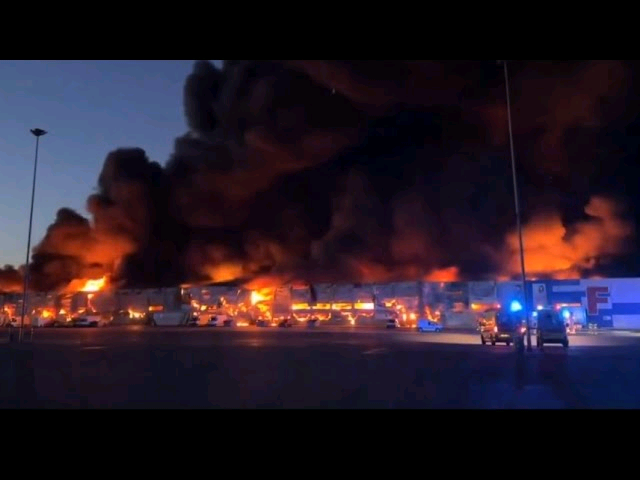
Late last week, authorities confirmed that a catastrophic incident, triggered by a massive industrial collapse at a chemical storage facility just outside Portsmouth, led to the loss of approximately 36,000 lives. While the precise cause remains under investigation, early reports suggest structural failure of multiple aging tanks compounded by severe weather conditions—heavy rainfall and flooding—pushed in by an unexpected storm front.
The chemical facility in question, which stored industrial reagents used by several manufacturing plants supplying the Hampshire region, was poorly maintained. Officials allege that earlier inspections flagged corrosion and structural weakening, but remedial work had been postponed due to budget constraints. Around midnight, following saturated ground conditions and pressure build-up, multiple storage tanks ruptured, releasing dangerous substances into the air.
Rescue operations commenced almost immediately. Fire services, police, and coastal rescue units were mobilized. A state of emergency was declared across Portsmouth, Southsea, and surrounding areas. Evacuation orders spread to nearby residential neighborhoods as airborne toxins risked affecting health broadly. Hospitals were put on alert, emergency shelters set up in community centers, schools used as temporary safe zones.
Within hours, local, regional, and national agencies swung into action. The Hampshire Fire & Rescue Service and Portsmouth City Council declared a major incident. They coordinated with environmental protection agencies to assess air and water contamination. Authorities are monitoring rods of fuel, chemical runoff, and the risk to the Solent (the waterway separating Portsmouth from the Isle of Wight) due to possible waterborne pollutants.
Meanwhile, volunteers from local grassroots groups—churches, charities, neighbourhood associations—began assisting displaced families, delivering food, clothing, and providing temporary housing. Portsmouth Hospitals University NHS Trust upgraded its status to deal with mass casualty situations, setting aside wards, marshaling extra staff, and liaising with mental health services to offer counseling.
The Prime Minister, along with several cabinet ministers, issued statements of support. Emergency aid is being released from central funds, with pledges to cover immediate relief as well as long-term recovery. Firms in the private sector—especially those nearby—stepped up, offering free accommodations, supplies, and manpower
A tragedy of this scale is often reduced to statistics. Yet behind each number, there are real people—families, neighbours, co-workers.
Sarah Mitchell, 38, a nurse at the Queen Alexandra Hospital, arrived on her shift unaware that her own street had been evacuated. She spent the night helping patients while her family sheltered in a community hall with uncertain access to clean water
Jake Turner, 17, had just started apprenticeship work at a local boatyard. The facility supplies parts to firms impacted by the chemical plant. Jake’s workplace has shut down indefinitely, leaving him anxious about his future.
The Ahmed family, recent immigrants, lost their small family home in Southsea to the chemical release. After being moved to a shelter, they were offered food and clothes by neighbours. Local mosque volunteers organized translation services and emotional support.
These stories reflect the profound emotional and social impact of the disaster. Neighbours checking on neighbours, local businesses donating, strangers embracing in grief and in solidarity.
Health, Environment and Safety Impact
Environmental agencies have raised concerns that the chemical contaminants include volatile organic compounds (VOCs) that may affect respiratory health. Air-quality sensors detected elevated levels of benzene and other toxins in localized zones. Water samples from nearby streams and drainage systems showed traces of heavy metals.
Health officials recommend that residents in affected zones remain indoors with windows closed until air quality improves. People with asthma, chronic obstructive pulmonary disease (COPD), or other respiratory conditions are particularly at risk. Local water authorities are testing municipal supplies to ensure no contamination has entered drinking water.
Furthermore, wildlife has been impacted. Local conservation groups report fish kills in the Solent, and many birds near marshlands showing signs of distress. Environmental cleanup is now a priority to prevent long-term ecological damage.
Investigation underway
An independent inquiry has been launched. Investigators are examining multiple angles:
1. Structural Assessments: Reviewing engineering reports, maintenance records, safety audits, and whether prior warnings were ignored.
2. Weather and Environmental Factors: Understanding how storm-driven flooding and drainage failures contributed to structural overload.
3. Regulatory Oversight: Whether the plant had been in compliance with health, safety, environmental regulations. If licensing or enforcement deficiencies existed, accountability will follow.
About the Author